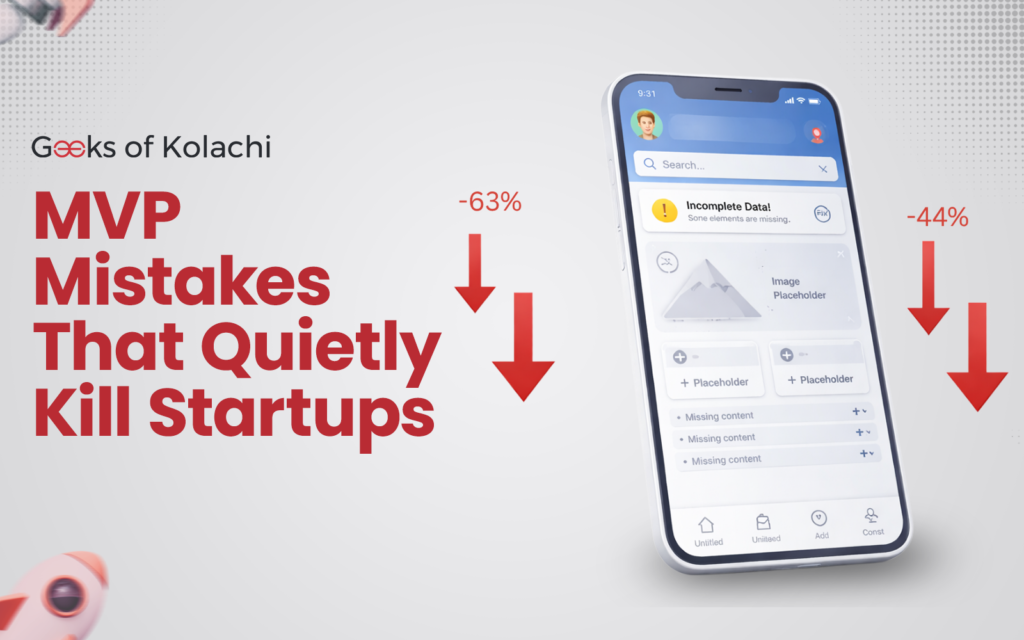
MVP Mistakes That Quietly Kill Startups
Every startup talks about building an MVP.
Founders pitch it. Investors expect it. Development teams plan around it.
And yet, a surprising number of startups fail not because they skipped MVP development, but because they misunderstood it.
The tragedy is that these mistakes are rarely dramatic. There’s no sudden crash. No explosive failure. Instead, the product launches quietly, gains mild traction, burns budget, and slowly loses momentum.
By the time the founders realize something is wrong, runway is thin and morale is lower.
If you are serious about software development for startups, you need to understand how MVP mistakes happen, and how to avoid building something that looks lean but behaves fragile.
Read More: Stop Wasting Cash on Developers Who Can’t Deliver
Confusing “Minimum” With “Incomplete”
One of the most common MVP mistakes is interpreting “minimum” as “barely functional.”
An MVP is not a prototype thrown together to test an idea casually. It is a focused product that solves a specific problem clearly and reliably.
When teams rush MVP development without ensuring usability, clarity, and performance, the product feels unstable. Early adopters try it once and leave.
Founders then misinterpret poor retention as lack of market demand. In reality, the issue was execution, not concept.
A strong MVP:
- Solves one core problem well
- Provides a clear value moment
- Works consistently
- Feels intentional
It does not need 20 features. But it must feel complete within its defined scope.
Building Too Much in the Name of Validation
On the other end of the spectrum, many startups treat their MVP as version 3.0.
Instead of validating one core workflow, they attempt to build:
- Multiple user roles
- Advanced dashboards
- Deep analytics
- Complex integrations
- Automation layers
This often happens in SaaS app development where founders want to appear enterprise-ready from day one.
The result is longer timelines, higher costs, and delayed validation.
By the time the product launches, months have passed, and the team still does not know whether users truly want the core value proposition.
An MVP should answer a specific question:
Will users engage with this solution enough to justify scaling?
Anything beyond that question belongs in later phases.
Ignoring User Onboarding During MVP Development
Another quiet killer of startups is neglecting onboarding.
Founders focus heavily on building features but overlook how users experience them for the first time.
If onboarding is confusing, slow, or overloaded with steps, users never reach the “aha” moment.
Common onboarding mistakes include:
- Asking for too much information upfront
- Overcomplicated setup processes
- No guided walkthrough
- Poor UX clarity
In custom app development, onboarding must be treated as a core feature, not a secondary one.
Your MVP is not validated when users sign up. It is validated when they experience value.
Failing to Define Success Metrics Before Launch
An MVP without defined metrics is a guess.
Before launching, founders should clearly define:
- What qualifies as traction?
- What retention rate signals product-market fit?
- What engagement metrics matter?
- What conversion percentage is acceptable?
Without these benchmarks, teams misinterpret data.
For example, 1,000 signups may look promising. But if only 5 percent of users return, the signal is weak.
Structured software development for startups requires aligning product decisions with measurable outcomes.
If you cannot define success before building, you will struggle to evaluate it after launch.
Treating Feedback as Optional Instead of Foundational
The purpose of an MVP is learning.
Yet some startups treat launch as a finish line instead of a starting point. They release the product and wait for organic growth without actively collecting feedback.
Effective MVP development requires:
- User interviews
- Behavioral analytics
- Direct communication with early adopters
- Iterative updates
If feedback loops are weak, iteration becomes random.
Growth depends on structured learning cycles.
Overlooking Scalability Foundations Entirely
While overbuilding is dangerous, underbuilding infrastructure can also hurt.
Some startups focus so narrowly on speed that they ignore basic architectural planning.
This leads to systems that:
- Slow down with modest growth
- Break under moderate traffic
- Accumulate technical debt immediately
Lean does not mean careless.
Even an MVP should have:
- Clean architecture
- Modular code structure
- Basic testing standards
- Performance considerations
Scalability planning does not require enterprise complexity. It requires foresight.
Resource for Founders Building Their First MVP
If you are considering AI integration but want a structured roadmap instead of hype-driven experimentation, this guide explains how to align AI systems with real business outcomes.
It focuses on clarity, practicality, and measurable results.
AI + Lean Development
AI becomes powerful when combined with disciplined custom app development.
Modern tools allow teams to:
- Accelerate prototyping
- Automate testing
- Optimize workflows
- Enhance scalability
However, these tools must be integrated within a stable architecture.
Smart AI application development builds on:
- Clear product scope
- Reliable backend systems
- Structured deployment pipelines
- Defined performance metrics
Without these foundations, AI becomes fragile.
Strategic Insight for Founders
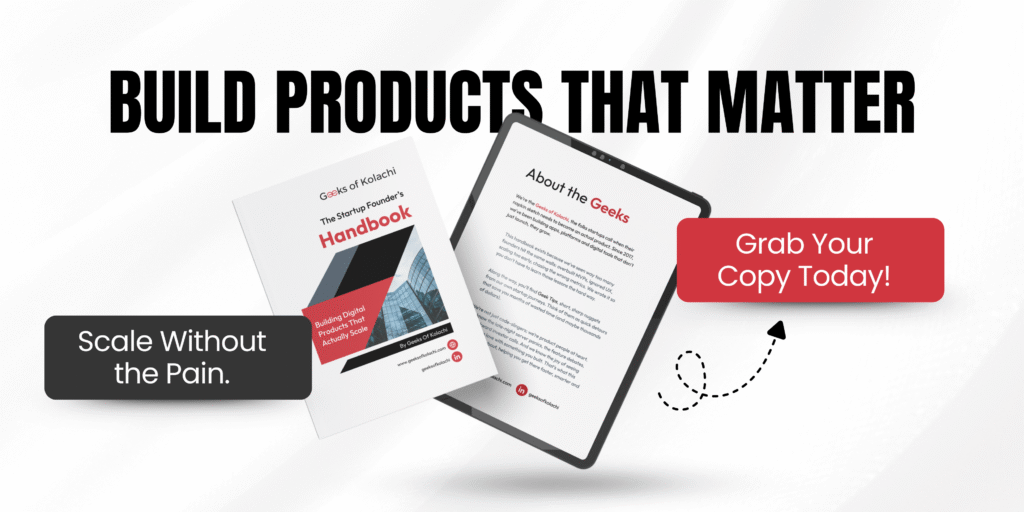
If you are preparing to launch or refine your MVP, this guide breaks down how to balance lean development with structural stability so your first version creates traction instead of friction.
SaaS Founders: Avoid Feature Creep Early
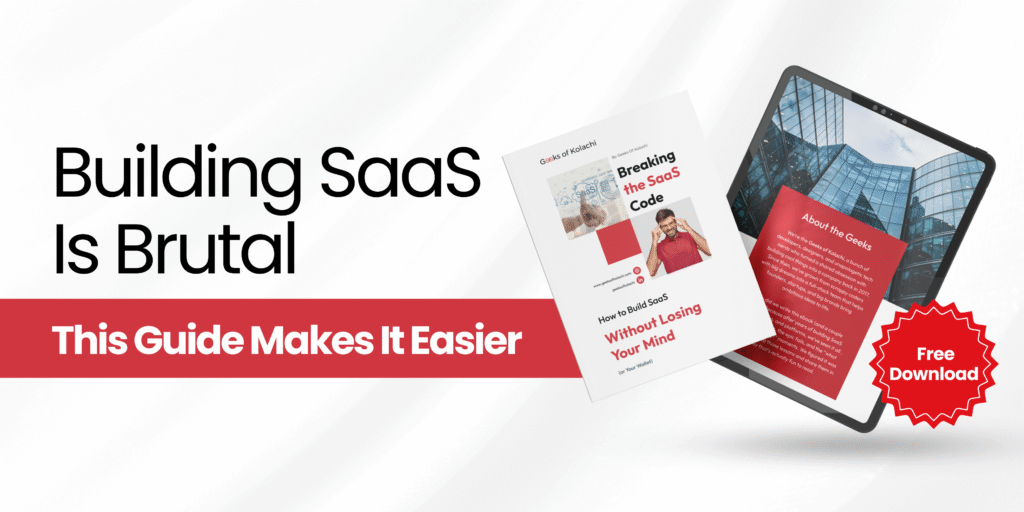
If you are building SaaS and struggling to limit scope during MVP development, this playbook explains how to validate demand without overengineering your first release.
Conclusion: An MVP Is a Learning Engine, Not a Shrunk Version of Your Dream
MVP mistakes do not usually explode. They drain momentum quietly.
Building too little damages credibility.
Building too much delays validation.
Ignoring onboarding weakens retention.
Skipping metrics blinds decision-making.
Neglecting structure creates long-term instability.
A successful MVP is disciplined. It focuses on one problem, one user, and one measurable outcome. It launches early, gathers feedback actively, and evolves deliberately.
Strong custom app development and structured SaaS app development do not aim for perfection in version one. They aim for clarity and learning.
When your MVP is built correctly, it becomes a foundation for growth. When built incorrectly, it becomes a slow drain on time and capital.
If you are building your first version, treat it as an experiment designed to generate insight, not as a miniature version of your long-term vision.
That mindset alone separates scalable startups from stalled ones.
Related:
Stuck in Development Hell? Here’s How to Ship Your MVP in 60 Days
Why Your SaaS Isn’t Scaling (And the Brutal Fix)
Your App Idea Is Bleeding Money. Here’s How to Fix It Before Launch