
Stuck in Development Hell? Here’s How to Ship Your MVP in 60 Days
There’s a stage in product building that almost every startup hits.
Development has started. Money is being spent. Progress meetings are happening. But the product still isn’t live.
Timelines keep moving. New features get added. Edge cases multiply. Bugs resurface. What was supposed to be a 3-month launch quietly becomes 8 months.
This is development hell.
And it rarely happens because your team is incompetent. It happens because the build lacks structure.
If you want to ship your MVP in 60 days, you don’t need superhuman developers. You need constraints, clarity, and discipline.
Let’s break it down.
Why Most MVPs Never Actually Launch
In theory, MVP development is about speed and validation. In reality, many startups treat MVP like a smaller version of the final product.
That’s where the delay begins.
Common reasons startups get stuck:
- Feature creep disguised as “just one more improvement”
- No strict scope freeze
- Weak product documentation
- Ongoing design changes mid-development
- Founders changing direction weekly
The result? Endless iteration without release.
Shipping in 60 days is possible. But only if you build with intent.
What a 60-Day MVP Actually Looks Like
A 60-day MVP is not:
- A full SaaS ecosystem
- A multi-role enterprise system
- A complex AI-powered platform
- A perfectly polished product
It is:
- One clear problem
- One user type
- One core workflow
- One measurable outcome
If your product cannot be described in one simple sentence, it is not ready for rapid development.
For example:
“We help freelance designers send invoices and get paid faster.”
That’s focused. That’s buildable.
The 60-Day MVP Framework
Here’s the structured approach we use in software development for startups that need speed without chaos.
Phase 1 (Week 1–2): Product Clarity and Scope Lock
Before writing code, define:
- Core user persona
- Core feature list (max 5 primary features)
- User journey map
- Technical stack
- Success metrics
Most delays happen because this phase is rushed.
Lock scope early. Once development starts, features do not get added. They go into Phase 2 backlog.
This single rule protects your timeline.
Phase 2 (Week 3–6): Focused Development Sprint
During development:
- Weekly sprint goals must be specific and measurable.
- Designers and developers should not redesign mid-sprint.
- Feedback loops must be controlled.
This is where strong custom app development discipline matters. The team builds only what was approved.
No bonus features.
> No sudden pivots.
> No emotional feature additions.
Discipline creates speed.
Phase 3 (Week 7–8): Testing, Refinement, and Launch Preparation
The final two weeks focus on:
- Bug fixes
- Performance optimization
- Basic analytics setup
- Deployment readiness
- Payment integration (if needed)
You are not adding new functionality here. You are stabilizing.
This is where many startups lose another month by reopening scope.
Don’t.
Ship version 1.
The Real Reason Founders Get Stuck
Most founders struggle with one internal conflict:
“If we launch too small, users won’t take us seriously.”
This fear drives overbuilding.
But here’s the reality:
Users care about solving their problem, not your feature count.
If your product solves one painful issue well, it earns credibility. If it tries to solve everything poorly, it earns churn.
MVP development is about validation, not perfection.
When You Need to Hire Software Developers Differently
If you’re stuck in development hell, your issue may not be technical skill. It may be team structure.
You should hire software developers who:
- Understand lean product strategy
- Have experience with startup cycles
- Can work within sprint constraints
- Prioritize shipping over polishing
Enterprise-style development teams often over-engineer early builds. Startups need lean execution.
Clarity + speed > complexity + perfection.
Ebook for Founders Moving Too Slowly
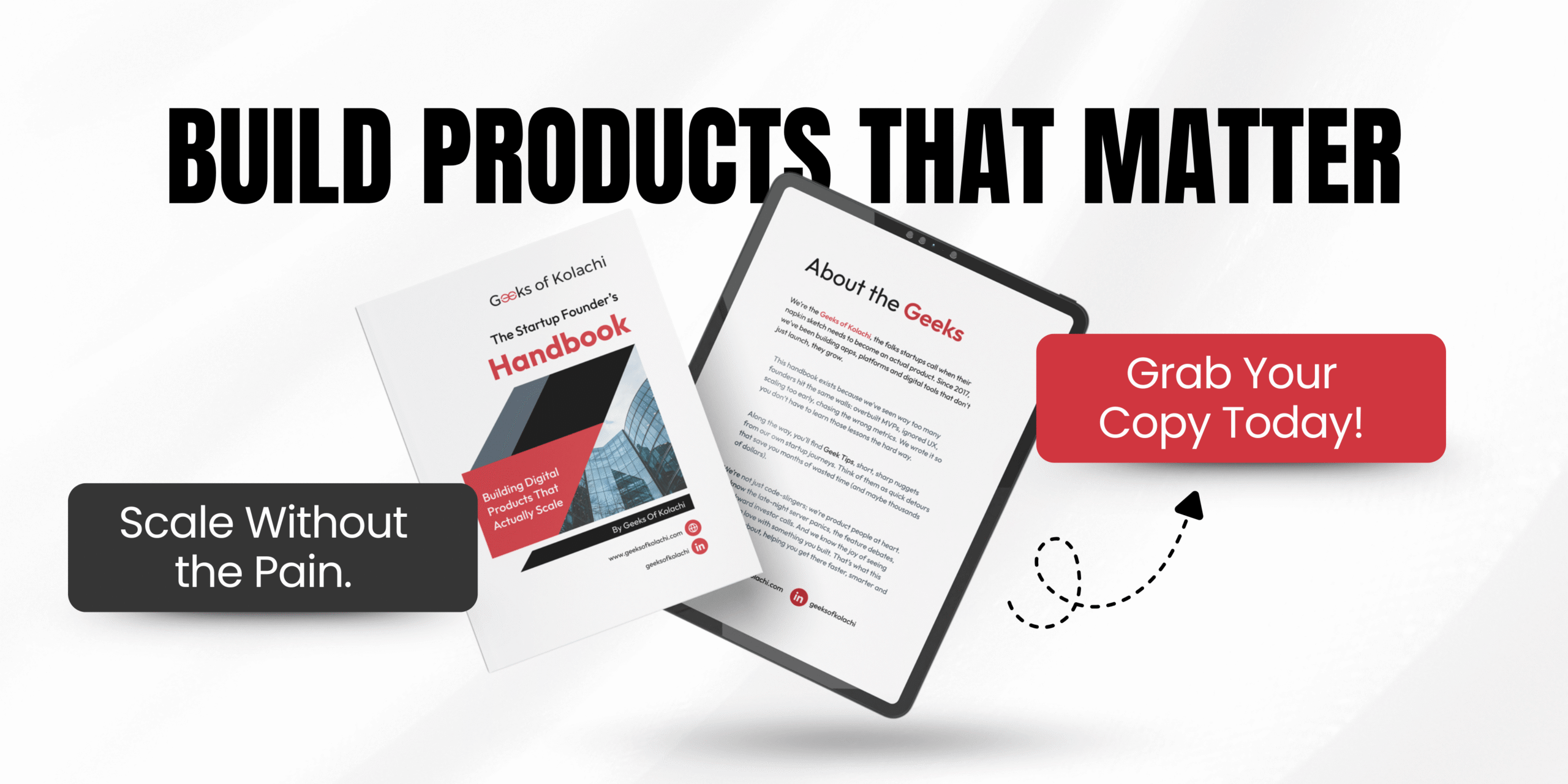
If you feel stuck between vision and execution, this guide walks through the exact decision-making patterns that help founders ship faster without sacrificing long-term scalability.
It is built specifically for early-stage digital product builders.
AI Won’t Save a Broken Timeline
Many founders now assume AI app development can speed everything up.
AI tools can assist with:
- Code generation
- Testing automation
- Design suggestions
- Workflow acceleration
But AI cannot compensate for unclear product direction.
If your scope is unstable, AI will only accelerate confusion.
Use AI to enhance execution, not replace strategy.
How to Protect Your 60-Day Timeline
If you want to commit seriously to a 60-day launch, implement these non-negotiables:
- Freeze scope before development.
- Define measurable success metrics.
- Limit feature count.
- Avoid redesign mid-sprint.
- Launch before you feel comfortable.
Discomfort is part of speed.
The goal is learning, not impressing.
SaaS Founders: Read This Before Expanding Scope

If you’re building SaaS and constantly tempted to add “just one more feature,” this playbook explains how to scale without feature overload and how to structure releases intelligently.
It helps you move fast without destroying your runway.
Final Thoughts
Development hell is not caused by coding difficulty. It is caused by lack of boundaries.
When MVP development is treated as a disciplined process rather than an early version of a big dream, 60-day launches become realistic.
For startups, speed is not optional. It is survival.
If your current project feels stuck, it may not need more developers. It may need clearer direction.
Define the core.
Lock the scope.
Ship the product.
Improve with real feedback.
That is how you escape development hell.