
Your App Idea Is Bleeding Money. Here’s How to Fix It Before Launch
Building a new app is exciting. It feels like momentum. Progress. Innovation. But for many founders and businesses, that excitement of an app idea quietly turns into financial leakage long before the product ever reaches users.
Budgets stretch. Timelines extend. Features multiply. Developers remain busy. Yet there is still no launch date in sight. If this sounds familiar, the issue is rarely technical complexity. More often, the problem lies in how the product is being approached from day one.
In this article, we’ll break down why early-stage products burn money unnecessarily and how to structure your custom app development the right way, so your idea survives long enough to scale.
Why App Ideas Start Losing Money Before Launch
Most early-stage software projects fail financially for three predictable reasons:
- The scope is unclear.
- The feature list keeps expanding.
- The first version is treated like the final version.
When businesses invest in software development for startups, they often attempt to build a fully mature product from the beginning. This usually includes advanced dashboards, multiple user roles, analytics systems, integrations, automation workflows, and polished UI details.
The intention is good. The execution is expensive.
Instead of validating a core idea, the team begins constructing a complete ecosystem. That dramatically increases development hours, complexity, and risk.
By the time the product is ready, the budget may already be strained.
The Misunderstood Concept of MVP Development

One of the most misused terms in product building is “MVP.”
Many founders interpret MVP development as building something cheap or incomplete. That misunderstanding leads to two opposite mistakes:
- Either they build too little and damage credibility.
- Or they ignore the MVP principle entirely and build too much.
A proper MVP is neither rushed nor sloppy. It is strategically minimal.
A well-defined MVP focuses on:
- Solving one clear problem.
- Serving one defined user segment.
- Delivering one core workflow.
- Measuring one primary success metric.
Everything beyond that is a secondary layer that should only be built after validation.
If your current product roadmap contains dozens of features before launch, it is not an MVP. It is version 3.0 disguised as version 1.
The Hidden Cost of Undefined Product Strategy
Many businesses rush to hire software developers before fully defining what needs to be built.
When that happens, developers are forced to:
- Participate in ongoing product discovery.
- Adjust to shifting requirements.
- Rework features due to changing direction.
- Build systems that may later be removed.
This leads to wasted hours and unnecessary cost.
Strong development teams execute efficiently when the product vision is clear. Without that clarity, development becomes iterative guesswork at engineering rates.
Before beginning custom mobile app development or SaaS app development, you should have:
- A documented feature priority list.
- Defined user personas.
- A mapped user journey.
- A monetization hypothesis.
- Clear validation criteria.
Without these foundations, your budget becomes a testing ground.
When Custom App Development Is the Right Move
Custom app development is powerful and often necessary, especially for startups building scalable digital products. However, it should follow validation, not replace it.
It makes sense to invest in full custom development when:
- You have confirmed real user demand.
- You understand how users interact with your solution.
- You have early traction or committed interest.
- Your product requires scalability from the outset.
If you are still refining your value proposition or experimenting with positioning, the smarter move is to validate through a lean build first.
This reduces financial exposure and increases decision clarity.
A Practical Framework to Stop the Bleeding
If your project already feels heavier than it should, here is a structured way to regain control.
1. Strip the Product to Its Core Value
Ask one critical question:
If this product could only do one thing exceptionally well, what would it be?
Everything else becomes optional for the first release.
This exercise alone often reduces scope by 40–60%.
2. Define Success Before Writing Code
Before committing to development hours, define what success looks like.
For example:
- 100 active users within 30 days.
- 25 paying subscribers.
- 40% week-over-week retention.
- 10 enterprise demos booked.
These metrics provide a validation checkpoint. Without them, you risk building indefinitely without clarity.
3. Build in Phases, Not in Bulk
A phased approach to software development for startups might look like this:
Phase 1: Core Workflow
Build only the essential functionality.
Phase 2: Feedback and Optimization
Refine based on real usage.
Phase 3: Monetization Enhancement
Improve pricing logic, payments, and onboarding.
Phase 4: Scale Infrastructure
Strengthen architecture once growth demands it.
This structure protects your capital while enabling growth.
The Role of AI in Early-Stage Development
With the rise of AI app development, many founders assume artificial intelligence can accelerate or even simplify product building.
AI can absolutely add leverage. But it cannot fix a broken strategy.
If the underlying workflow is unclear or the user problem is poorly defined, adding AI increases complexity rather than reducing it.
AI should enhance validated systems, not compensate for undefined ones.
If you are exploring AI-driven features, ensure your base product is stable first.
Ebook Resource for Founders
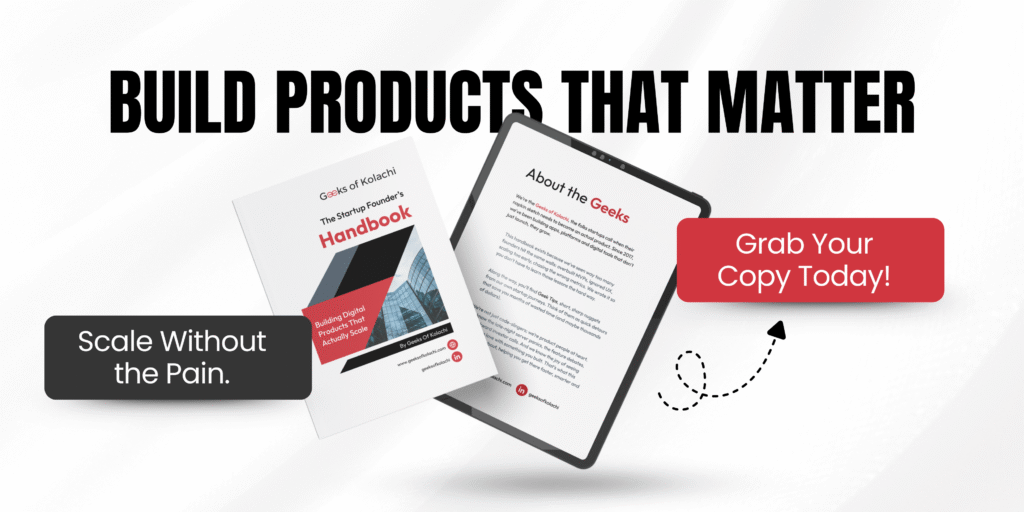
If you are currently building or planning a digital product, this guide walks through real-world startup patterns, common execution mistakes, and how to structure product development so it scales instead of collapses.
It is designed specifically for founders navigating early-stage software decisions.
Avoiding Costly Hiring Mistakes
Hiring the right development team matters. But timing matters more.
You should hire software developers when:
- Your scope is clearly documented.
- Your MVP is defined.
- Your budget matches phased execution.
- You understand your technical requirements.
Hiring prematurely leads to expensive iteration cycles.
A disciplined hiring process combined with structured MVP development ensures your team builds efficiently from day one.
Additional Strategic Insight
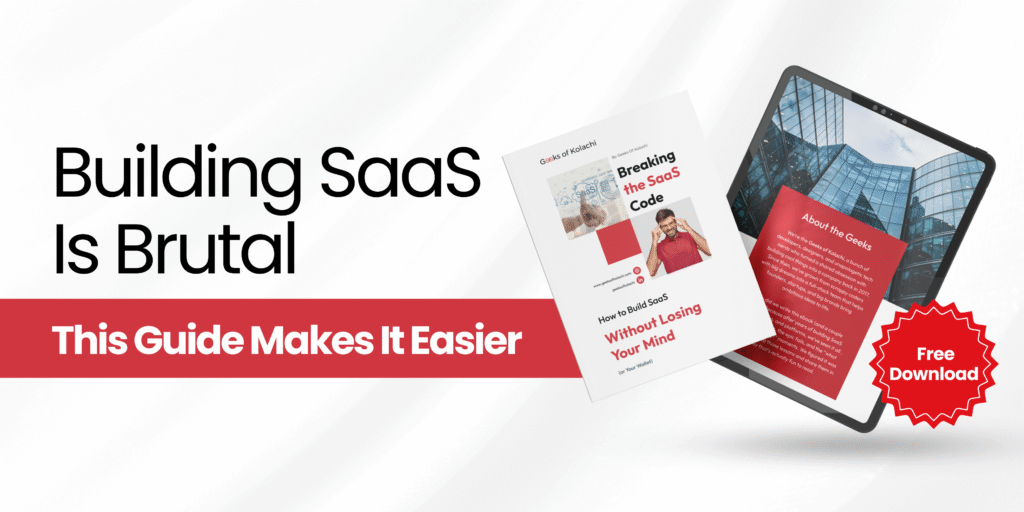
If you are building a SaaS product, this playbook provides a structured breakdown of scope control, validation strategy, pricing logic, and scalable architecture decisions.
It is particularly useful for founders who feel overwhelmed by feature creep and development costs.
Final Thoughts
If your app idea feels expensive before launch, that is not a sign that technology is unaffordable. It is usually a sign that product clarity is missing.
Successful startups do not build everything at once. They validate first. They scale second.
By focusing on disciplined MVP development, phased custom app development, and strategic hiring decisions, you dramatically reduce financial waste and increase your chances of launching something that truly works.
If you are planning your next build and want a structured, scalable approach to development, this is the moment to reset your strategy.
Build lean.
Validate early.
Scale intentionally.